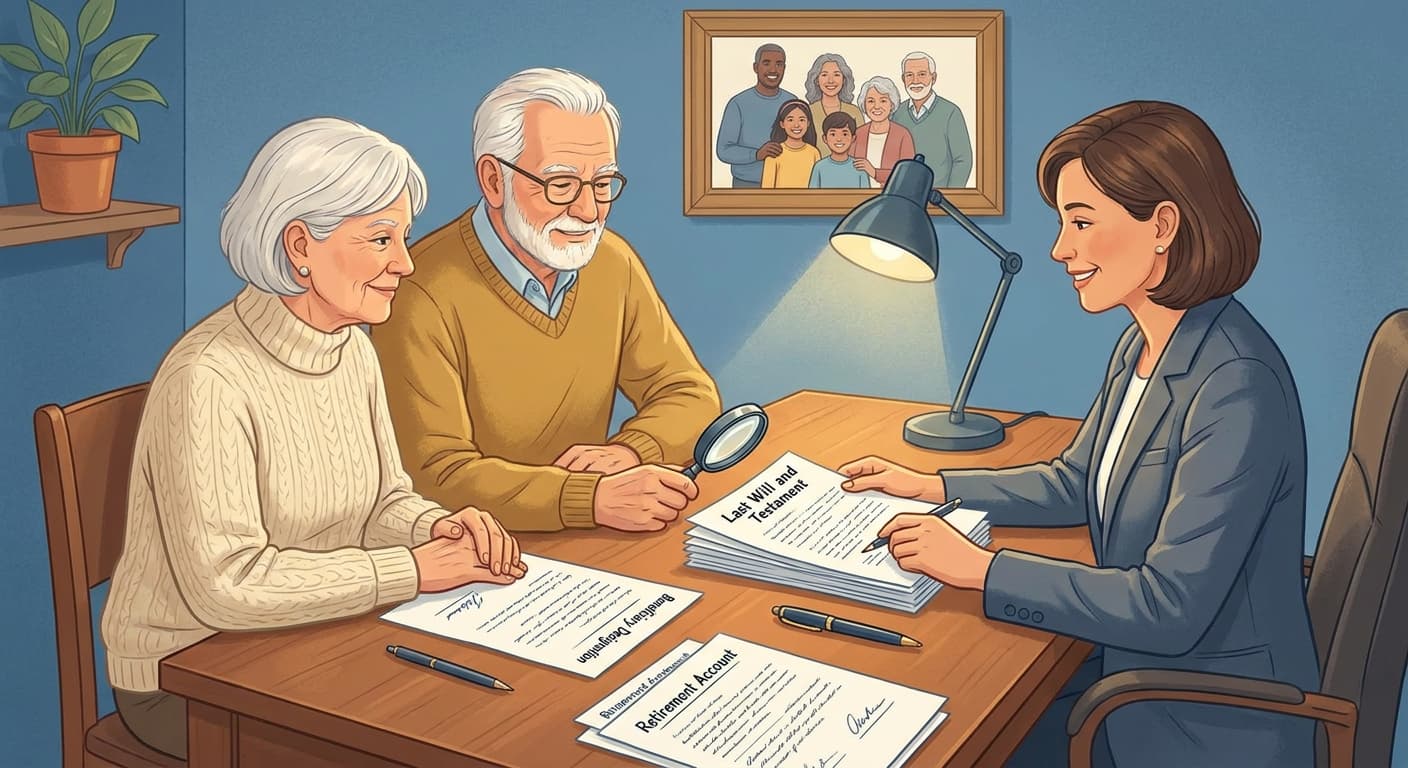
Stress-Test Your Estate Plan: Would It Work When Your Family Needs It Most?
Most people create an estate plan, sign the documents, put them in a drawer… and never look at them again. But here’s the truth: an estate plan is only effective if it actually works in real-life scenarios — not just on paper. Think of it like a financial fire drill. You hope you never need it, but if the moment comes, your family must know exactly what to do, who’s in charge, and how everything transfers. This is where stress-testing comes in.

What Does It Mean to Stress-Test an Estate Plan?
A stress test examines whether your documents, beneficiaries, trustees, and instructions would function smoothly in a real emergency — not just in theory.
You’re checking for:
Gaps
Conflicts
Missing documents
Outdated decisions
Practical roadblocks
The goal is simple:
Make sure your estate plan actually does what you think it will.
1. Test: What Happens If You Become Incapacitated Today?
Ask yourself:
Who can legally access your bank accounts?
Who can pay your bills, manage investments, or handle your business?
Does your agent know where your documents are?
Do they know your medical wishes?
If the answer is unclear, you may need to update:
Power of Attorney
Healthcare Proxy
Living Will
HIPAA releases
Incapacity planning is often more important than death planning.
2. Test: Are Your Assets Properly Titled and Accessible?
Your trust or will only works if your assets are aligned with it.
Check:
Are all your bank accounts titled correctly?
Did you forget to transfer assets into your trust?
Do beneficiary designations match the plan?
Are there duplicate or conflicting accounts?
Most estate plan failures happen because of improper titling — not bad documents.
3. Test: Would Your Executor or Trustee Know What To Do?
Your executor/trustee should:
Know their role
Understand your wishes
Be financially responsible
Be able to communicate with beneficiaries
Have access to your important documents
If they can’t carry out the job, the entire plan can collapse.
Consider a backup.
4. Test: Are Your Beneficiaries Still the Right Ones?
Life changes.
Relationships evolve.
Marriages begin and end.
Children grow up.
Ask:
Is anyone missing?
Does anyone need special protections?
Should someone’s inheritance be placed in a trust?
Are minors properly planned for?
Never rely on outdated instructions or assumptions.
5. Test: Does Your Plan Survive Real-World Complications?
Examples:
What if a beneficiary dies before you?
What if your spouse remarries?
What if a child struggles with addiction or debt?
What if your business partner disputes ownership?
What if taxes increase or property values change?
A strong estate plan anticipates complications — and solves them ahead of time.
6. Test: Does Your Family Know the Plan Exists?
Even the perfect estate plan can fail if:
No one knows where documents are
Passwords are missing
Instructions aren’t communicated
Key people are left in the dark
A confidential conversation today can prevent chaos later.
The Final Step: Review Every 2–3 Years
Just like stress-testing a financial portfolio, reviewing your estate plan regularly ensures that it stays strong, accurate, and aligned with your life.
Your legacy is too important to leave to chance.
Final Thought
A stress-tested estate plan gives your loved ones the gift of clarity, confidence, and peace during the hardest time of their lives.
You worked hard to build your legacy — make sure it survives the test.